DIVERS, 2022


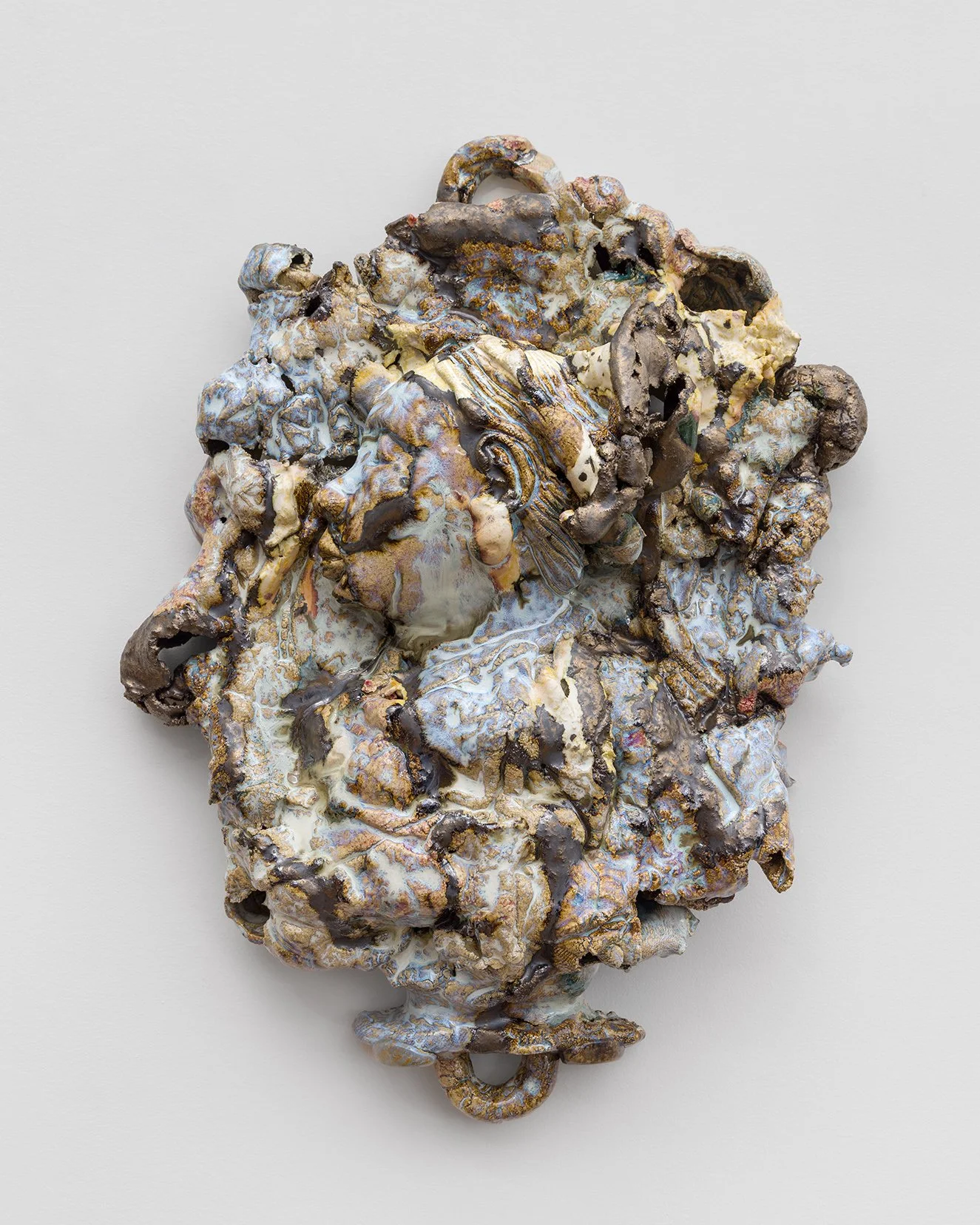
Photography: Daniel Terna, Etienne Frossard
Someday, New York, November 4 - December 17, 2022
https://somedaygallery.com/
Nino Mier Gallery, Los Angeles, July 8 - August 19, 2023
Organized by Peter Brock and presented by Someday
Museum of Arts and Design, New York, June 1, 2024 - 2025
Craft Front & Center, exhibition series featuring work from the permanent collection and recent acquisitions
https://madmuseum.org/exhibition/craft-front-center-1
https://collections.madmuseum.org/objects/19400/diver-i
I am a deep diver into the past; I search for links that connect my personal experience with collective and ancestral histories spanning time and place. I am on the lookout for form, even fragments. I search for evidence of my connection to others and wider sense of belonging within the world and within history. I use intuition, research, knowledge, memory, and imagination to identify objects, source materials, and things that enable me to elucidate the past in the present with unexpected complexity.
Over several years, I returned frequently to the medieval galleries at The Metropolitan Museum of Art in New York City, where I live, to study a rosary of memento mori prayer beads carved in ivory [17.190.306]. The beads are double-sided cameo relief portraits of fashionable burghers set within silver mounts that resemble fruit-laden garlands. Two of the beads are ‘death ivories’ – when flipped over, a skeleton appears in place of the sitter. The terminal beads each resemble a bifurcated head of a skull and a cadaver, not unlike an anatomy model. Similar objects had a second life as curiosities in Kunstkammer collections that brought together scientific instruments, antiquarian objects, and exotic specimens. I was interested in the object’s connection to an early period of global trade and colonization, and I sought to contend with its form: interlinked profile plaques in high relief. I thought about commemoration, memorials, medallions, cameo jewelry, funerary objects, and architectural decoration, and wanted to challenge assumptions about idealization and who might be worthy of depiction through relief portraiture. I wanted to learn from and think alongside the memento mori while using my hands to create something with a new meaning. When it first caught my attention, I recognized a form that was flexible and open enough for me to speak through it. It was an opportunity to contend with the aesthetics of European sculpture and a distant past while crossing historical and geographic boundaries.
When I visualize a sculpture in my mind before working on it, there are usually a few blurry or blank spots that I can’t figure out conceptually. Sometime these gaps – the unknown parts – are minor, and sometimes they are consequential and significant and yet I proceed forward with curiosity. The undetermined is an invitation to my hands to figure things out and solve the puzzle. Once my hands touch the material, the answers begin to appear. A fellowship and six-month studio residency at the Museum of Arts and Design provided the impetus for this project. When I began working on Diver I, I didn’t know who the subject would be. As a starting point, I used my face as a proportional reference and as a scaffolding to intuitively search for and build up other faces as I sculpted at life-size – perhaps the imagined likeness of an ancestor who has no photographic record. As I shaped the clay, I started to see faces that I recognized, but from the memory bank of my childhood. With Diver I, I perceived a resemblance to my mother.
I used plasticine, an oil-based clay unsuitable for exhibition yet ideal for mold making. After the mold was made, I took the unconventional approach of sculpting a second time inside the negative space: shaping and pressing stoneware clay against the mold’s rigid walls. With this method, I could gouge and tear the clay while maintaining structural integrity and an overall hollow shape by using an interior clay scaffolding. The substructure had a cage-like appearance, with chambers and textured septum walls which reminded me of the cross-section of ammonite fossils, nautilus shells, and wasp nests. After the sculptures were kiln-fired and mounted vertically, they resonated differently, resembling amulets, talismans, ancestral portraits, or masks. Diver I is comprised of five parts held in place by a single mount, suggestive of excavation, archaeology, and a surface worn and weathered by time. The rifts, gaps, dissections, and cuts are emblematic of my interpretation of a fragmented past.
I identify as a diver who ventures into the depths of the past, but the title of the series originated elsewhere. When I encountered the memento mori rosary at The Metropolitan Museum, I thought about mission churches and objects of piety set against landscapes of devastation – tropical landscapes that were familiar to me. I thought about my family’s entanglement with histories of colonization in the Pacific region, the Catholic mission schools three generations of my family attended in Hawai`i, the pink plastic rosary I purchased for one dollar from Sister Maria Cordis, and the sugar and pineapple plantations owned by missionary descendants where my ancestors labored. The pale beige, calcium-based material of ivory reminded me of bleached corals and ancient coral skeletons; and I remembered mission churches that were constructed from coral slabs hewn from underwater reefs, including the oldest and largest church in Honolulu, where I was raised, and in the Philippines and Indonesia. I thought about the extreme labor required to build these coral churches, including freediving, hand-chiseling, and hauling massive blocks of the living organism out from the ocean with chain and rope. My thoughts extended to global networks across continents and oceans and the trade and circulation of knowledge, people, and things. I discovered that ruins are part of who I am, connecting me to sediments and layers of history.
Thank you:
Museum of Arts and Design, fellowship and studio residency; Someday Gallery, New York; Clay Space, Brooklyn; Johnny Coast, Maishe Dickman, Stephan Hurlburt, mount fabrication; Harry Kleeman, mold making; Daniel Terna, Etienne Frossard, photography
BREADFRUIT (`ULU)
BOTANICAL CAGE AND PERIMETER WALL
CHORUS
COUROUPITA/CORPUS
DIVER CHAIN
DIVERS
HOUSE ON CANNONBALL STREET
LODESTAR
SEED BOX: TREES OF NEW YORK
SOUTHERN OCEANS
UNDER A CONSTELLATION OF LEAVES
ADDITIONAL WORK
PRESS
STATEMENT & CONTACT INFO
CV